

Child Custody Mediation in Georgia
Estimated Read Time: 12-13 Minutes
Navigating the future of your family is a journey of transition, and in Georgia, you have more tools than ever to build a stable, thriving environment for your children. Whether you are tailoring a schedule around a unique career, finding balance across state lines, or working together to ensure every decision serves your child’s best interests, the path forward is paved with clarity and empowerment. With the updated 2026 guidelines providing a clear and fair framework for both time and support, and the collaborative power of mediation at your side, you can move from uncertainty to a confident, custom-built plan. This is your opportunity to turn a complex legal process into a solid foundation for your child’s happiness, ensuring that both parents stay meaningfully connected in a way that truly fits your modern life.
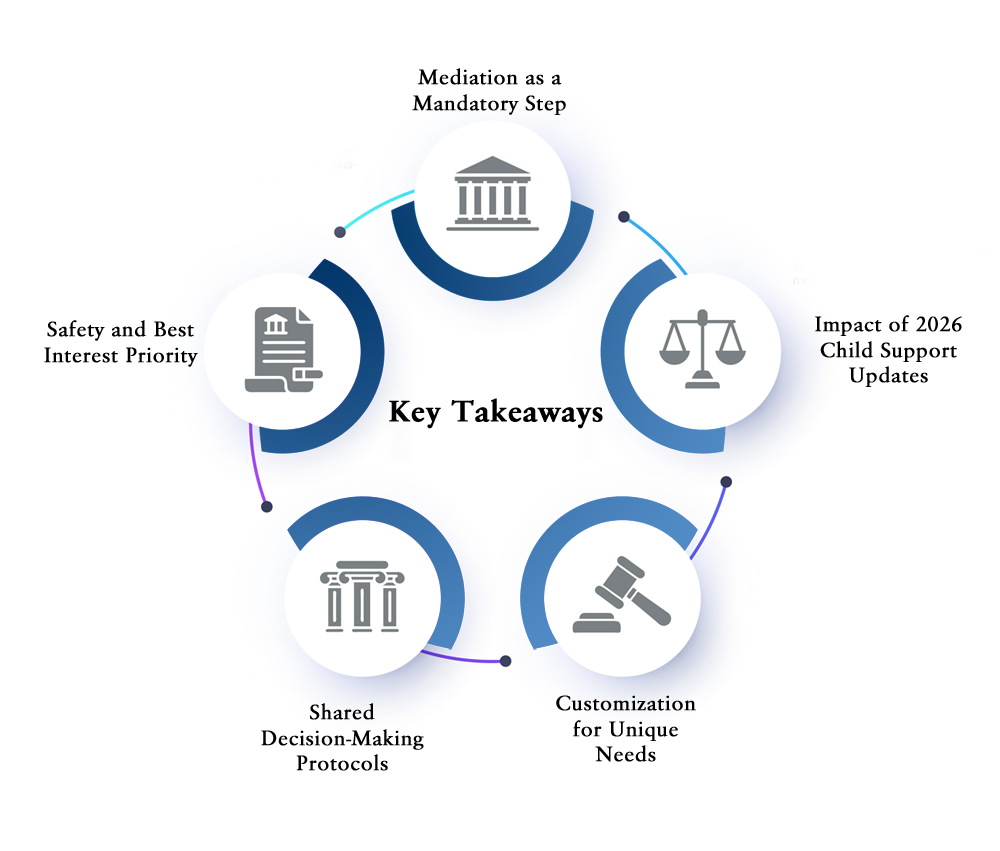 Key Takeaways:
Mediation as a Mandatory Step: In most Georgia counties, mediation is a standard and often required step before parents can take a custody case to trial. It is a private, confidential meeting in which a neutral professional helps parents reach an agreement on parenting schedules and decision-making.
Impact of 2026 Child Support Updates: As of January 1, 2026, child support is directly linked to the number of overnights a child spends with each parent through a parenting time adjustment formula. Mediation has become a vital tool for parents to precisely calculate these overnight schedules to ensure fair financial outcomes.
Customization for Unique Needs: Mediation allows families to create tailored plans for complex situations that a judge’s standard order might not address, such as non-traditional work schedules, long-distance travel offsets, and step-up plans for rebuilding parental relationships.
Shared Decision-Making Protocols: Most Georgia custody orders involve joint legal custody, which requires parents to consult each other on major life decisions regarding school, healthcare, and religion. To avoid deadlocks, these plans must name a final tie-breaker parent for each area.
Safety and Best Interest Priority: While the law encourages both parents’ involvement, safety is the absolute priority.
Mediation and Determining Custody in Georgia
In Georgia, mediation is a standard part of the custody process and is often a mandatory step before you are allowed to take your case in front of a judge. Think of mediation as a private meeting where you and the other parent meet with a neutral professional, called a mediator, to reach an agreement on a parenting schedule and on how decisions will be made for your child. The mediator is not there to take sides or make the final call. Instead, they help keep the conversation focused on what is best for the child. While many courts require you to attend at least one session, you are never forced to sign an agreement you don’t like. If you can’t reach a compromise, you move forward with a trial in court.
One of the biggest benefits of mediation is its confidentiality. This means that anything you say while trying to work things out cannot be used against you later in court if you don’t reach a deal. It’s a safe space to explore different schedules or other arrangements. However, the court will make exceptions to the mediation requirement if there is a history of domestic violence or a major safety concern. In those cases, the law recognizes that it isn’t fair or safe to ask parents to negotiate together.
If you reach an agreement, the mediator will write everything down in a document that will eventually become a formal parenting plan. This plan is then handed to a judge for a final look. As long as the judge agrees that the plan is truly in the child’s best interests, they will sign off on it and issue it as a binding legal order. Especially with recent 2026 changes to Georgia law, where the number of nights a child spends with each parent now directly affects child support payments, mediation has become a popular way for parents to work out these complex financial and scheduling details together rather than leaving them to a judge.
Recent Changes to the Law
Beginning January 1, 2026, Georgia introduced sweeping changes to its child custody and child support laws aimed at creating a more structured, transparent, and family-centered system. The revised framework places greater emphasis on shared parenting responsibilities, financial accuracy, and the overall well-being of children by reducing uncertainty in how support obligations are determined.
One of the most impactful updates is the mandatory Parenting Time Adjustment. Under the previous system, judges had the discretion to reduce child support when one parent exercised substantial parenting time, but there was no requirement to do so. The new law changes that entirely. Courts must now formally calculate parenting time using a standardized worksheet known as Schedule C. Because the law recognizes that parents directly provide housing, meals, transportation, and day-to-day care during overnight visits, support calculations now automatically factor in the actual amount of time a child spends with each parent. In many cases, the greater the number of overnights a parent has, the more the support calculation reflects those shared expenses.
Georgia also implemented additional safeguards intended to improve fairness and protect children from harmful custody practices. Ethan’s Law, which became effective in July 2025, restricts courts from compelling children into coercive reunification programs, forced camps, or involuntary out-of-state placements designed to pressure family relationships. At the same time, lawmakers added a mandatory low-income adjustment to prevent financially strained parents from being pushed below a sustainable income level. Instead of relying solely on judicial discretion, the updated system uses a structured formula tied to verified income levels to automatically adjust support obligations when appropriate.
Together, these reforms represent a major shift toward custody and support decisions that more accurately reflect real parenting arrangements, economic realities, and child-centered protections within modern Georgia families.
Legal Custody
Legal custody in Georgia is all about who has the power to make the big decisions in a child’s life. While the parent who has the child at any given moment makes small, daily choices, like what the child eats for dinner, legal custody covers four specific major areas: school, healthcare, religion, and expensive or time-consuming after-school activities. It also gives parents the legal right to get information directly from the child’s school or doctor, ensuring both parents can stay informed about the child’s progress and health.
Most of the time, Georgia judges grant joint legal custody, which means parents are expected to talk to each other and try to agree before making a major change, such as switching schools or starting a new medical treatment. To prevent parents from getting stuck in a permanent disagreement, every court order must name a final decision-maker. This is a designated tiebreaker parent who makes the final call if the two parents cannot agree after a serious discussion. A judge might give one parent the final say in everything, or they might split it up, giving one parent the final word on school and the other the final word on healthcare.
In recent years, especially following legal updates in 2026, Georgia courts have placed greater emphasis on how parents communicate about these major decisions. Many judges now require parents to use special messaging apps to discuss these topics so there is a clear, written record for the court. This helps ensure that joint legal custody actually involves both parents and that the final decision-maker isn’t just cutting the other parent out of the process. Legal custody is the framework that ensures a child’s most important needs are being managed and decided on by their parents in an organized way.
Physical Custody
Physical custody in Georgia is about where a child actually lives and which parent is caring for them on any given day. While some parents choose a primary physical custody setup, where the child lives with one parent most of the time and visits the other on weekends and holidays, others choose joint physical custody, where the child splits their time roughly equally between two homes. Regardless of the schedule, every family must have a written parenting plan that acts as a calendar, showing exactly where the child will be every night of the year, including birthdays and school breaks.
Even when parents share time almost equally, the court usually names one person as the primary parent. This is mostly for practical reasons, such as determining which school district the child will attend based on the parents’ home address. If there are safety concerns, such as a history of violence or drug use, a judge might order supervised visitation, meaning the parent can only see the child when a trusted third party or a professional is there to watch over the visit.
The recent changes to the law have made counting these days much more important for financial considerations. Georgia now uses a specific formula called a Parenting Time Adjustment to calculate child support. Under this new rule, the more nights a child stays at your house, the more your child support payment might be adjusted to reflect the money you are spending on food and housing during that time. Because of this, parents in 2026 have to be very precise about their schedules, as every overnight stay can directly change the amount of child support being paid or received.
Married and Unmarried Status
The law treats custody differently depending on whether the parents were married at the time of the child’s birth. For married parents, the law is very straightforward: both the mother and the father are seen as equal legal parents from day one. This means they both have the automatic right to live with the child and make major life decisions, such as where the child goes to school or which doctor the child sees, without first needing a court order. Neither parent has a greater right to the child than the other until a judge steps in during a divorce or separate custody case to set a specific schedule.
For unmarried parents, the rules are much more lopsided at the start. According to state law, the mother is the only person with legal and physical custody of the child at birth. Even if the father’s name is on the birth certificate or he is already paying child support, he has no legal right to visitation or custody. To get those rights, an unmarried father must go through a court process called legitimation. Only after a judge signs a legitimation order is the father considered a legal parent, who can then request a parenting schedule and a say in major decisions.
This distinction has become even more important with the law changes that went into effect on January 1, 2026. Under the new rules, child support is now tied directly to the number of nights a child spends with each parent. Because an unmarried father has no legal right to overnights until he completes the legitimation process, he might end up paying higher child support because he doesn’t officially have the child in his care. Once he is legally recognized, he can use his court-ordered parenting time to adjust those payments fairly. While married parents start on equal footing, unmarried fathers must take legal action to achieve the same level of parental rights.
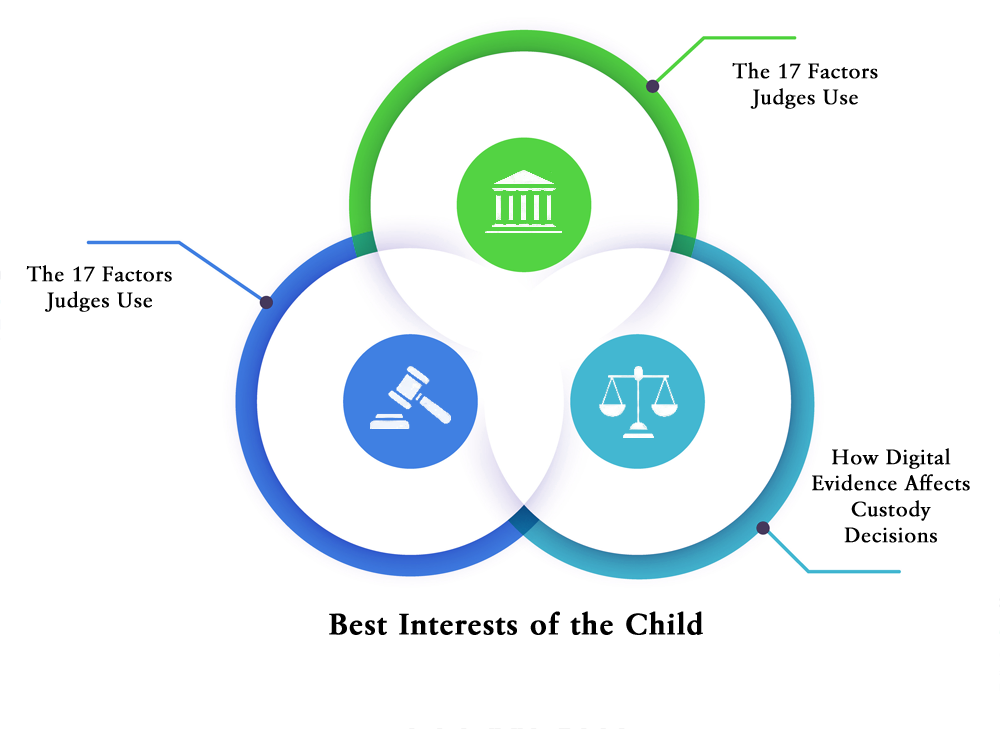 Determining the Best Interests of the Child
When a Georgia judge determines custody, they apply the best interests of the child rule. This means the judge doesn’t automatically favor the mother or the father. Instead, they look at 17 factors to determine which parent can provide the safest, most supportive home. One of the biggest things they look at is the emotional bond the child has with each parent and their siblings. They want to see who the hands-on parent has historically been, and to know who knows the doctor’s name, helps with homework, and makes sure the child is fed and clothed every day. The goal is to keep the child’s life as stable as possible, so the judge will often try to keep the child in the home or school district they are already used to.
Another major factor is what lawyers often call the friendly parent rule. The judge considers which parent is more likely to foster a good relationship with the other parent. If one parent tries to hide the child, talks badly about the other parent, or refuses to cooperate, the judge may see that as harmful to the child’s well-being. Of course, safety is the absolute priority. If there is any history of domestic violence, drug abuse, or child neglect, the judge will take that very seriously and may limit that parent’s time or require their visits to be supervised.
In today’s world, especially with the 2026 updates, judges must also consider digital evidence when making these decisions. They might look at messages on co-parenting apps to see if parents are being respectful, or check school portals to see which parent is actually staying involved in the child’s education. When making these choices, the judge acts like a detective, examining every aspect of the child’s life to ensure the final custody plan helps the child grow up happy, healthy, and safe.
Family life can be busy and complicated, and there isn’t always a one-size-fits-all way to make some decisions in order to best fit a family’s unique needs. Mediation can be particularly advantageous in these situations. A judge has limited time and might default to a standard schedule. Working with a mediator can help you to build a plan around non-traditional work schedules, specific school calendars, or long-distance travel needs.
For example, since child support and overnights are now legally linked, mediation allows you to negotiate both at once. Parents can agree on a travel expense offset or a step-up plan that automatically adjusts child support as the parent spends more time with the child, something a judge is unlikely to do from the bench.
FAQ’s
Is mediation mandatory in Georgia? In most Georgia counties, the answer is yes. While state law doesn’t technically require everyone to mediate, individual judicial circuits almost always require parents to at least attempt mediation before they are allowed to proceed to a final trial before a judge. The court’s goal is to see if you can work out a plan yourself, as parents are usually happier with schedules they helped create than ones a judge picks for them.
Can a mediator decide who gets custody? No. A mediator is a neutral third party, not a judge. They do not have the power to make decisions, pick a side, or order you to do anything. Their only job is to help you and the other parent talk through your options and find a middle ground. If you can’t reach an agreement, the mediator simply reports to the court that you reached an impasse, and your case moves forward to a judge who will then make the final decision.
How much does mediation cost, and who pays for it? The cost varies depending on whether you use a private mediator or a court-connected program. In many Georgia counties, court-ordered mediation may have a set hourly fee, and the judge typically orders the parents to split that cost 50/50. However, if there is a big difference in your incomes, or if one parent is using a hardship waiver, the judge may order one parent to pay more than the other.
What happens if we can’t agree on everything? Mediation doesn’t have to be all-or-nothing. You can reach a partial agreement, where you agree on things like holiday schedules or medical decisions, but leave the big disagreements, such as who the child lives with during the week, for the judge to decide. This saves time and money because you only have to argue over a few specific points in court rather than over your entire life.
Why is mediation extra important in 2026? Since January 1, 2026, child support and custody have been legally tied together. Because every overnight stay now automatically changes the amount of child support paid (due to the new Schedule C rules), mediation is the best place to handle the math. A mediator can help you count your overnights and plug them into the state’s new calculator in real-time, ensuring that the financial side of your agreement is just as solid as the scheduling side.
The Child’s Election
A child’s election means that as children get older, the law gives them more of a say in which parent they want to live with. For teenagers 14 or older, the law actually grants them a presumptive right to choose. This means if a 14-year-old signs a formal document called an affidavit stating they want to live with one parent, the judge will almost always honor that wish. The only time a judge will say no is if the chosen parent is clearly unfit, meaning they have serious problems like drug abuse or a history of violence, or if moving would be genuinely harmful to the child. Once a child makes this formal choice, they usually have to wait at least two years before they are allowed to change their mind and switch back, which prevents them from switching homes every time they get in trouble.
For younger children between the ages of 11 and 13, the rules are a bit different. They can still tell the judge what they want, and the judge is legally required to listen, but the child doesn’t get the final vote. Instead, the judge treats the child’s preference as just one piece of the puzzle. To make it less stressful, the judge will often talk to the child privately in their office rather than in a busy courtroom. The judge’s main goal is to determine whether the child is making a mature decision or is being pressured or bribed with gifts by one of the parents.
In 2026, courts are extra careful about how these choices are made. Because a child’s choice to move can now change how much child support is paid, judges often bring in a neutral expert, like a Guardian ad Litem, to make sure the child isn’t being used as a pawn in a financial battle. Essentially, while the law respects a teenager’s growing independence, the judge still acts as a safety net to ensure the child’s choice leads to a healthy and stable home life.
Mandatory Parenting Plans
A mandatory parenting plan is a detailed legal document that is required in every case involving children. Think of it as the ultimate guidebook for how you and the other parent will raise your child while living in separate homes. Because of major changes to Georgia law that took effect on January 1, 2026, these plans have to be incredibly precise, especially when it comes to the calendar. Every single night of the year must be accounted for, including regular weeks, school holidays, and birthdays. This is because the court now uses the exact number of overnights to calculate child support. This means that the more nights a child spends at your house, the more it may reduce the support you have to pay, as the law recognizes you are spending more on food and housing during that time.
Beyond the calendar, the plan also explains who has the final say on the big four areas of a child’s life: school, healthcare, religion, and expensive after-school activities. Even if you share joint legal custody, the plan must name a tie-breaker parent who makes the final decision if you both can’t agree after discussing it. The plan also covers the practical who, where, and why of swapping the kids, such as meeting at a specific school or park, and who is responsible for the gas or transportation costs.
Finally, a modern Georgia parenting plan usually sets the ground rules for how everyone stays in touch. In 2026, many judges now require parents to use specific co-parenting apps to message each other, ensuring a clear, respectful record of all discussions. It also outlines how often the parent who doesn’t have the child that day can call or video chat with them. Essentially, the plan removes all the guesswork from co-parenting so that both parents and children know exactly what to expect every day of the year.
Modification of Custody
Changing a custody agreement in Georgia is a two-step process that begins with proving that your life or your child’s life has changed significantly. In legal terms, this is called a material change in circumstances. This could be anything from a parent moving to a different city, a major shift in a work schedule, or a child reaching age 14 and choosing to live with the other parent. You can’t just ask for a change because you are unhappy with the current plan. Instead, you have to show the judge that the situation is different now than it was when the last order was signed. While you can usually ask to tweak small visitation details, such as pickup times, every two years, a major change, such as where the child lives most of the time, requires you to prove that this material change has actually happened and that the new plan is truly what is best for the child.
Because of the major law updates that started this year, modifying your schedule now has an immediate impact on your finances. For example, if you modify your schedule to add or remove even a few nights, the court is legally required to recalculate your child support to reflect those changes. Because this involves a lot of math, most parents go to mediation first. In mediation, you can use data from co-parenting apps to show the mediator exactly how much time the child has been spending at each house, which helps everyone agree on a fair new payment and schedule.
The actual process usually involves filing a formal petition in court, but before you ever see a judge, you will likely be required to attend a mediation session to try and work things out privately. If you and the other parent can agree on the changes, the judge will typically sign off on the new plan as long as it keeps the child’s safety and happiness as the top priority. However, if you can’t agree, a judge will hold a trial and consider the best-interest factors, such as the child’s school performance and their bond with each parent, to decide whether the old agreement should remain in place or be updated.
 Family Violence
Think of an instance of family violence as a red flag that changes how a judge looks at a custody case. While the state usually likes both parents to be involved, the law says that if there is proof of violence, the safety of the child and the other parent must come first. A judge doesn’t need a police report or a criminal conviction to take action. Instead, they can look at any evidence you bring to court. If violence is found, the parent who was abusive will likely lose the right to share custody and may only get supervised visitation, where a professional or a trusted adult stays in the room to make sure the child is safe. The law also protects parents who have to flee a dangerous home, ensuring that leaving to stay safe isn’t used against them as abandoning the child.
Mediation is handled with extreme care in these situations. In Georgia, a judge cannot force a victim of family violence to sit in the same room or be on the same video call as their abuser. If mediation occurs at all, it is usually conducted through shuttle mediation, in which the parents are in separate rooms, and the mediator moves back and forth between them. This prevents any intimidation or pressure. Mediation in these cases is strictly used to build a safety-first plan, which might include rules like meeting at a police station for hand-offs or requiring all communication to happen through a recorded app so the parents never have to speak directly.
Under updated laws for 2026, judges are even more restricted and are prohibited from forcing a child to attend reunification sessions with an abuser if there is a protective order in place. Because every overnight stay now impacts child support due to the new January 1, 2026, math rules, mediation helps ensure that the safety plan is legally solid and that the abuser cannot use the child’s schedule to financially control or hurt the other parent.
Child Support
Child support is calculated using a formula that looks at the combined income of both parents to determine the basic cost of raising a child. Each parent is then responsible for a portion of that cost based on their earnings. However, as of January 1, 2026, the most significant factor in this calculation is the overnight rule. The court now uses a specific form, Schedule C, to count exactly how many nights the child stays at each parent’s house. Because the law recognizes that you are already spending money on food and housing when the child is with you, the more overnights you have, the more your monthly child support payment may be reduced.
Mediation is incredibly helpful in this process because it allows you to get the math right in a private, calm setting. While a judge might just use a standard table, a mediator can help you account for extra expenses that are unique to your family, such as private school tuition, expensive sports, or high travel costs if you live in different cities. This is especially useful for parents with non-traditional work shifts or rotating schedules where the number of overnights changes every month. A mediator can help you calculate a fair yearly average so your child support stays consistent and fair.
Mediation allows you to negotiate deviations, which are special adjustments to the payment that a judge might not grant in a busy courtroom. For example, if one parent is paying 100% of the health insurance or daycare costs, mediation lets you balance those costs against the monthly support amount. Think of mediation as ensuring that the final number is based on the reality of your life and your bank account, rather than just a one-size-fits-all computer formula.
Mediation and Non-Traditional Work Schedules
If you work outside of a 9-to-5, such as a nurse on a 12-hour rotation, a firefighter on 24-hour shifts, or a pilot who travels for days at a time, the standard every other weekend custody plan might not be the best fit for your life. In Georgia, you have the right to create a custom schedule that follows your actual work roster instead of a typical office calendar. These plans are built around when you are actually home, ensuring you don’t miss time with your kids just because your weekend falls on a Tuesday and Wednesday.
A very helpful tool for shift workers is the right of first refusal. This is a rule you can put in your plan that says if the parent who has the kids gets called into work or has to be away for a long time, they must call the other parent to see if they want to watch the kids before calling a babysitter or a grandparent. This keeps the kids with a parent as much as possible and can be a lifesaver for someone with an unpredictable work schedule.
Because of the recent changes to the law, these custom schedules are now tied directly to your bank account. The more nights a child is with you, the more your child support payment is adjusted to help cover the costs of food and housing while they are in your care. Because these rotating work schedules can be mathematically complicated, it is usually much easier to work them out in mediation. There, you can create a flexible calendar that handles your work shifts fairly, rather than letting a judge pick a rigid schedule that might not match your job.
Mediation and Split Decision Making
Shared decision-making is a part of the law that ensures both parents have a seat at the table for the big milestones in a child’s life. While the parent who is with the child on a Tuesday makes the small daily choices, such as what they eat for lunch, shared decision-making covers bigger decisions, such as where the child goes to school or what doctors they see. To keep life moving when parents can’t agree, every plan must name a tie-breaker for each of these areas. This is called split authority. For example, a judge or a mediation agreement might decide that one parent makes the final call on school issues while the other makes the final call on healthcare. This keeps things balanced so that no one parent has total control over every major aspect of the child’s life.
Even when one parent is the final decision-maker, Georgia law says you must talk to the other parent and try to reach an agreement in good faith before you use that power. You can’t simply enroll a child in a new school and tell the other parent about it afterward. Since the 2026 legal updates, judges are much stricter about this. Now, messages on co-parenting apps are checked to make sure parents are actually consulting each other. If a parent with final say just starts making choices without talking to the other parent first, a judge can actually find them in trouble with the court for not following the joint part of their legal custody.
Mediation is incredibly helpful for these arrangements because it allows parents to customize these tie-breaker powers based on their actual strengths. In a courtroom, a judge who might not know your family well might just give all the power to one parent to keep things simple. In mediation, however, you can be more creative. For example, if one parent is a nurse, you can agree that they should have the final say on medical issues. If the other is a teacher, they can handle the final school decisions. Because you both had a hand in splitting this authority, you are much more likely to respect the process and get along better in the future. Mediation helps turn a potential power struggle into a specialized partnership, which is much better for the child in the long run.
Mediation and High Conflict Exchange Logistics
High-conflict exchange logistics are the specific safety rules created for parents who cannot interact peacefully when swapping their children. In Georgia, the goal is to make these hand-offs as boring and predictable as possible so the child isn’t caught in the middle of an argument. Common strategies include zero-contact swaps, where one parent drops the child off at school in the morning, and the other picks them up in the afternoon, or meeting at safe exchange zones, located at local police stations under 24/7 video surveillance. Some families even use professional centers where a staff member physically walks the child from one car to another so the parents never have to see or speak to each other.
Mediation plays a vital role in these situations because it allows parents to create a tailored safety bubble that meets their specific needs. While a judge might only have time to give you a standard meeting time and place, a mediator can help you iron out the tiny details that actually prevent fights. This might include agreeing on curbside rules, such as requiring one parent to stay in the car at all times, or setting a strict waiting period before a visit is considered missed. Because the mediator is a neutral third party, they can suggest these boundaries without it feeling like one parent is winning over the other, which helps lower the overall tension.
Mediation can also help you agree on which co-parenting apps to use for digital check-ins, providing a clear, GPS-verified record of who was where and when. By working these details out in a calm mediation setting, you create a clear roadmap that protects your safety, your finances, and your child’s peace of mind.
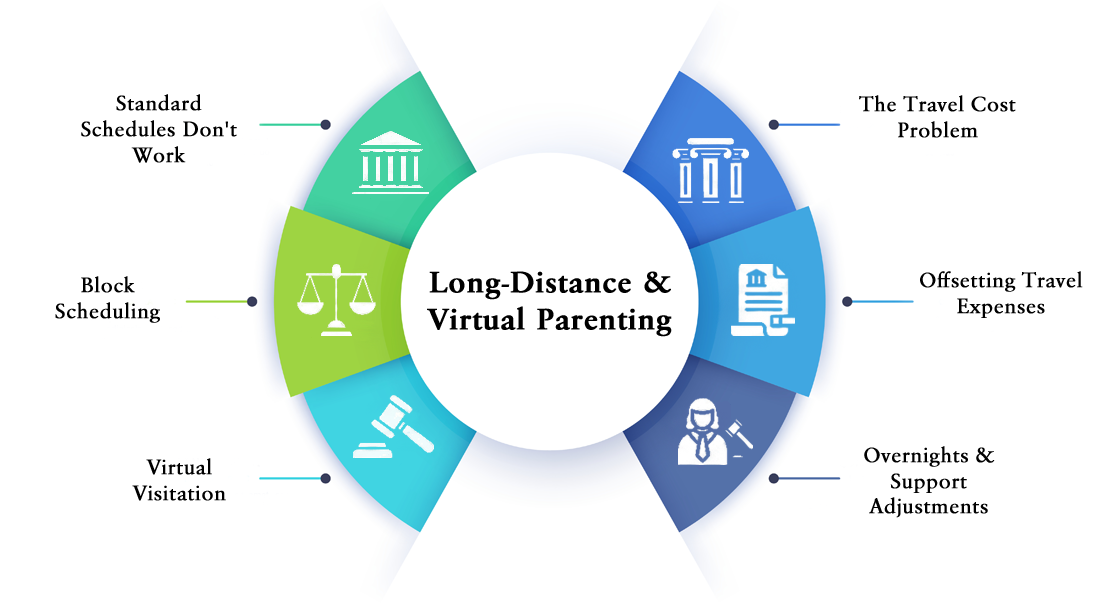 Mediation and Long-Distance Logistics
When parents live in different states or faraway cities, a standard every-other-weekend schedule is often impossible. Instead, these families usually use long-distance plans that swap frequent short visits for longer blocks of time. For example, the far-away parent might have the child for the entire summer or every spring break to make up for the time lost during the school year. They also set up virtual visitation, which are scheduled video calls or online gaming dates that help the child stay connected with the parent they don’t see every day.
Mediation is vital for long-distance families because it helps solve the money vs. travel problem. Traveling across states is expensive, and in a courtroom, a judge might not have the power or the time to lower your child support just because you’re spending thousands on plane tickets. In mediation, however, you can agree to offset travel expenses. This means you can negotiate to have the money you spend on flights or gas subtracted from your monthly child support payment. This makes sure that seeing your child is actually affordable for everyone involved.
As child support is now tied directly to the exact number of nights a child stays at your house, a long-distance parent, who naturally has fewer overnights, might end up with a very high payment. Mediation allows you to be creative. You can work together to count those long summer blocks or agree on a parenting time adjustment that is fair to both households. By using mediation, you can build a custom plan that prioritizes the child’s relationship with both parents rather than just following a rigid math formula.
Mediation and Step-Up Plans
A step-up plan is essentially a practice run for custody. It starts with very short visits, gradually adds more time, and eventually includes overnights, as the child becomes more comfortable and the parent proves they are consistent. These plans are perfect for parents who are rebuilding a relationship with their child after being away for a while, or for infants who aren’t quite ready to spend the night away from their primary caregiver. Instead of jumping into a full schedule immediately, you move through phases, like starting with a few hours at a park, then moving to full days, and finally reaching a regular overnight schedule.
Mediation can be the best way to create these plans that are specific to your family because they require a lot of what-if thinking that a judge might not have the time to handle. A court order is often rigid, but a mediator helps you build a custom roadmap with clear milestones. You can agree on exactly what needs to happen to move to the next step, such as completing a parenting class, providing a clean drug test, or having a certain number of successful Saturday visits. Because both parents help design these triggers, there is usually much less fighting when it’s time to move to the next phase, as everyone knows exactly what to expect.
Schedule a Child Custody Legal Evaluation
The Claiborne Firm charges a $450 fee for an initial child custody mediation case evaluation. This consultation is designed to provide clear legal answers, strategic guidance, and a better understanding of how to protect your children, parental rights, and future. During the consultation, you will meet directly with Will Claiborne and his legal team to discuss the unique circumstances surrounding your custody dispute and mediation goals.
The evaluation is intended to provide clarity, direction, and actionable insight early in the process. It can help identify potential parenting concerns, communication challenges, and important legal considerations while outlining a strategic path toward resolving custody matters through mediation rather than a stressful and expensive court battle.
The Claiborne Firm approaches child custody mediation with thorough preparation, strategic planning, and a strong focus on resolution through thoughtful communication and tactical strategies designed to help both sides hear, understand, and work through each other’s perspectives more effectively. The consultation helps parents better understand their options, prepare for productive mediation discussions, and work toward a resolution centered on the best interests of their children.
Abbeville, GA
Acworth, GA
Adairsville, GA
Adel, GA
Adrian, GA
Ailey, GA
Alamo, GA
Alapaha, GA
Albany, GA
Aldora, GA
Allenhurst, GA
Allentown, GA
Alma, GA
Alpharetta, GA
Alston, GA
Alto, GA
Ambrose, GA
Americus, GA
Andersonville, GA
Arabi, GA
Aragon, GA
Arcade, GA
Argyle, GA
Arlington, GA
Arnoldsville, GA
Ashburn, GA
Athens, GA
Atlanta, GA
Attapulgus, GA
Auburn, GA
Augusta, GA
Austell, GA
Avalon, GA
Avera, GA
Avondale Estates, GA
Baconton, GA
Bainbridge, GA
Baldwin, GA
Ball Ground, GA
Barnesville, GA
Bartow, GA
Barwick, GA
Baxley, GA
Bellville, GA
Berkeley Lake, GA
Berlin, GA
Bethlehem, GA
Between, GA
Bishop, GA
Blackshear, GA
Blairsville, GA
Blakely, GA
Bloomingdale, GA
Blue Ridge, GA
Bluffton, GA
Blythe, GA
Bogart, GA
Boston, GA
Bostwick, GA
Bowdon, GA
Bowersville, GA
Bowman, GA
Braselton, GA
Braswell, GA
Bremen, GA
Brinson, GA
Bronwood, GA
Brookhaven, GA
Brooklet, GA
Brooks, GA
Broxton, GA
Brunswick, GA
Buchanan, GA
Buckhead, GA
Buena Vista, GA
Buford, GA
Butler, GA
Byromville, GA
Byron, GA
Cadwell, GA
Cairo, GA
Calhoun, GA
Camak, GA
Camilla, GA
Canon, GA
Canton, GA
Carl, GA
Carlton, GA
Carnesville, GA
Carrollton, GA
Cartersville, GA
Cave Spring, GA
Cecil, GA
Cedartown, GA
Centerville, GA
Centralhatchee, GA
Chamblee, GA
Chatsworth, GA
Chattahoochee Hills, GA
Chauncey, GA
Chester, GA
Chickamauga, GA
Clarkesville, GA
Clarkston, GA
Claxton, GA
Clayton, GA
Clermont, GA
Cleveland, GA
Climax, GA
Cobbtown, GA
Cochran, GA
Cohutta, GA
Colbert, GA
College Park, GA
Collins, GA
Colquitt, GA
Columbus, GA
Comer, GA
Commerce, GA
Concord, GA
Conyers, GA
Coolidge, GA
Cordele, GA
Cornelia, GA
Covington, GA
Crawford, GA
Crawfordville, GA
Culloden, GA
Cumming, GA
Cusseta, GA
Cuthbert, GA
Dacula, GA
Dahlonega, GA
Daisy, GA
Dallas, GA
Dalton, GA
Damascus, GA
Danielsville, GA
Danville, GA
Darien, GA
Dasher, GA
Davisboro, GA
Dawson, GA
Dawsonville, GA
Dearing, GA
Decatur, GA
Deepstep, GA
Demorest, GA
Denton, GA
De Soto, GA
Dexter, GA
Dillard, GA
Doerun, GA
Donalsonville, GA
Dooling, GA
Doraville, GA
Douglas, GA
Douglasville, GA
Dublin, GA
Dudley, GA
Duluth, GA
Dunwoody, GA
Du Pont, GA
East Dublin, GA
East Ellijay, GA
Eastman, GA
East Point, GA
Eatonton, GA
Echols County, GA
Edge Hill, GA
Edison, GA
Elberton, GA
Ellaville, GA
Ellenton, GA
Ellijay, GA
Emerson, GA
Enigma, GA
Ephesus, GA
Eton, GA
Euharlee, GA
Fairburn, GA
Fairmount, GA
Fargo, GA
Fayetteville, GA
Fitzgerald, GA
Flemington, GA
Flovilla, GA
Flowery Branch, GA
Folkston, GA
Forest Park, GA
Forsyth, GA
Fort Gaines, GA
Fort Oglethorpe, GA
Fort Valley, GA
Franklin, GA
Franklin Springs, GA
Funston, GA
Gainesville, GA
Garden City, GA
Garfield, GA
Gay, GA
Geneva, GA
Georgetown, GA
Gibson, GA
Gillsville, GA
Girard, GA
Glennville, GA
Glenwood, GA
Good Hope, GA
Gordon, GA
Graham, GA
Grantville, GA
Gray, GA
Grayson, GA
Greensboro, GA
Greenville, GA
Griffin, GA
Grovetown, GA
Gumbranch, GA
Guyton, GA
Hagan, GA
Hahira, GA
Hamilton, GA
Hampton, GA
Hapeville, GA
Haralson, GA
Harlem, GA
Harrison, GA
Hartwell, GA
Hawkinsville, GA
Hazlehurst, GA
Helen, GA
Hephzibah, GA
Hiawassee, GA
Higgston, GA
Hiltonia, GA
Hinesville, GA
Hiram, GA
Hoboken, GA
Hogansville, GA
Holly Springs, GA
Homeland, GA
Homer, GA
Homerville, GA
Hoschton, GA
Hull, GA
Ideal, GA
Ila, GA
Iron City, GA
Irwinton, GA
Ivey, GA
Jackson, GA
Jacksonville, GA
Jakin, GA
Jasper, GA
Jefferson, GA
Jeffersonville, GA
Jenkinsburg, GA
Jersey, GA
Jesup, GA
Johns Creek, GA
Jonesboro, GA
Junction City, GA
Kennesaw, GA
Keysville, GA
Kingsland, GA
Kingston, GA
Kite, GA
LaFayette, GA
LaGrange, GA
Lake City, GA
Lakeland, GA
Lake Park, GA
Lavonia, GA
Lawrenceville, GA
Leary, GA
Leesburg, GA
Lenox, GA
Leslie, GA
Lexington, GA
Lilburn, GA
Lilly, GA
Lincolnton, GA
Lithonia, GA
Locust Grove, GA
Loganville, GA
Lone Oak, GA
Lookout Mountain, GA
Louisville, GA
Lovejoy, GA
Ludowici, GA
Lula, GA
Lumber City, GA
Lumpkin, GA
Luthersville, GA
Lyerly, GA
Lyons, GA
McCaysville, GA
McDonough, GA
McIntyre, GA
Macon, GA
McRae–Helena, GA
Madison, GA
Manassas, GA
Manchester, GA
Mansfield, GA
Marietta, GA
Marshallville, GA
Martin, GA
Maxeys, GA
Maysville, GA
Meansville, GA
Meigs, GA
Menlo, GA
Metter, GA
Midville, GA
Midway, GA
Milan, GA
Milledgeville, GA
Millen, GA
Milner, GA
Milton, GA
Mitchell, GA
Molena, GA
Monroe, GA
Montezuma, GA
Monticello, GA
Montrose, GA
Moreland, GA
Morgan, GA
Morganton, GA
Morrow, GA
Morven, GA
Moultrie, GA
Mountain City, GA
Mountain Park, GA
Mount Airy, GA
Mount Vernon, GA
Mount Zion, GA
Nahunta, GA
Nashville, GA
Nelson, GA
Newborn, GA
Newington, GA
Newnan, GA
Newton, GA
Nicholls, GA
Nicholson, GA
Norcross, GA
Norman Park, GA
North High Shoals, GA
Norwood, GA
Nunez, GA
Oak Park, GA
Oakwood, GA
Ochlocknee, GA
Ocilla, GA
Oconee, GA
Odum, GA
Offerman, GA
Oglethorpe, GA
Oliver, GA
Omega, GA
Orchard Hill, GA
Oxford, GA
Palmetto, GA
Parrott, GA
Patterson, GA
Pavo, GA
Peachtree City, GA
Peachtree Corners, GA
Pearson, GA
Pelham, GA
Pembroke, GA
Pendergrass, GA
Perry, GA
Pinehurst, GA
Pine Lake, GA
Pine Mountain, GA
Pineview, GA
Pitts, GA
Plains, GA
Plainville, GA
Pooler, GA
Portal, GA
Porterdale, GA
Port Wentworth, GA
Poulan, GA
Powder Springs, GA
Pulaski, GA
Quitman, GA
Ranger, GA
Ray City, GA
Rayle, GA
Rebecca, GA
Register, GA
Reidsville, GA
Remerton, GA
Rentz, GA
Resaca, GA
Rest Haven, GA
Reynolds, GA
Rhine, GA
Riceboro, GA
Richland, GA
Richmond Hill, GA
Riddleville, GA
Rincon, GA
Ringgold, GA
Riverdale, GA
Roberta, GA
Rochelle, GA
Rockmart, GA
Rocky Ford, GA
Rome, GA
Roopville, GA
Rossville, GA
Roswell, GA
Royston, GA
Rutledge, GA
St. Marys, GA
Sale City, GA
Sandersville, GA
Sandy Springs, GA
Santa Claus, GA
Sardis, GA
Sasser, GA
Savannah, GA
Scotland, GA
Screven, GA
Senoia, GA
Shady Dale, GA
Sharon, GA
Sharpsburg, GA
Shellman, GA
Shiloh, GA
Siloam, GA
Sky Valley, GA
Smithville, GA
Smyrna, GA
Snellville, GA
Social Circle, GA
Soperton, GA
South Fulton, GA
Sparks, GA
Sparta, GA
Springfield, GA
Stapleton, GA
Statesboro, GA
Statham, GA
Stillmore, GA
Stockbridge, GA
Stone Mountain, GA
Stonecrest, GA
Sugar Hill, GA
Summertown, GA
Summerville, GA
Sumner, GA
Sunny Side, GA
Surrency, GA
Suwanee, GA
Swainsboro, GA
Sycamore, GA
Sylvania, GA
Sylvester, GA
Talbotton, GA
Talking Rock, GA
Tallapoosa, GA
Tallulah Falls, GA
Talmo, GA
Tarrytown, GA
Taylorsville, GA
Temple, GA
Tennille, GA
Thomaston, GA
Thomasville, GA
Thomson, GA
Thunderbolt, GA
Tifton, GA
Tiger, GA
Tignall, GA
Toccoa, GA
Toomsboro, GA
Trenton, GA
Trion, GA
Tucker, GA
Tunnel Hill, GA
Turin, GA
Twin City, GA
Tybee Island, GA
Tyrone, GA
Ty Ty, GA
Unadilla, GA
Union City, GA
Union Point, GA
Uvalda, GA
Valdosta, GA
Varnell, GA
Vernonburg, GA
Vidette, GA
Vienna, GA
Vidalia, GA
Villa Rica, GA
Waco, GA
Wadley, GA
Waleska, GA
Walnut Grove, GA
Walthourville, GA
Warm Springs, GA
Warner Robins, GA
Warrenton, GA
Warwick, GA
Washington, GA
Watkinsville, GA
Waverly Hall, GA
Waycross, GA
Waynesboro, GA
Webster County, GA
West Point, GA
Whigham, GA
White, GA
White Plains, GA
Whitesburg, GA
Willacoochee, GA
Williamson, GA
Winder, GA
Winterville, GA
Woodbine, GA
Woodbury, GA
Woodland, GA
Woodstock, GA
Woodville, GA
Woolsey, GA
Wrens, GA
Wrightsville, GA
Yatesville, GA
Young Harris, GA
Zebulon, GA
Call (912) 351-8775 or Schedule a Free Case Evaluation Online